Audio · Field note 034
HomePod mini 2 grows into Apple’s surround-sound system
Apple’s $149 speaker brings an S10 chip, music-reactive lighting, Mac audio support, and Siri AI in a later update.
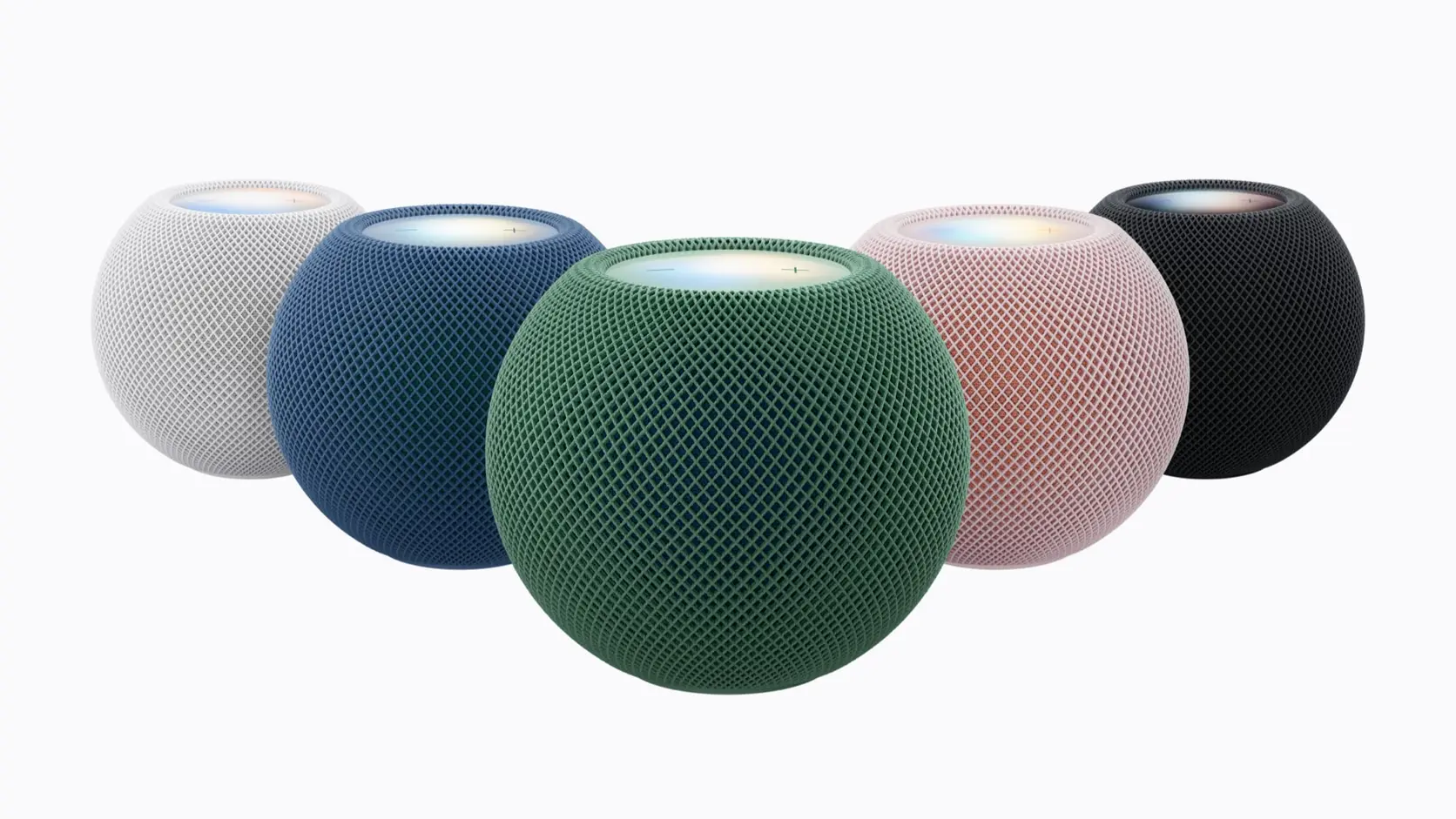
The smallest HomePod is no longer just Apple’s inexpensive way into room-filling audio.
HomePod mini 2 adds an S10 chip, a new music-reactive lighting feature, support as a Mac speaker, and a future path to Siri AI. It is available to preorder now for $149 in pink, green, blue, white, and midnight, with store availability beginning October 30.
Siri AI will arrive later through a software update rather than at launch. When paired with an Apple Intelligence-capable iPhone or iPad, it can use personal context to find a song mentioned in a message, create a reminder tied to a calendar event, retrieve a recipe from email, or add items to a grocery list. The speaker can recognize as many as six voices in one household.
One speaker, several roles
Apple says the S10 chip drives real-time computational audio that adjusts dynamic range, loudness, and acoustic performance. A single HomePod mini 2 still produces 360-degree sound, while stereo pairing and multiroom playback remain available.
The larger change appears when the speaker is connected to the new Apple TV 4K. Four HomePod mini 2 units can form front and rear pairs for a calibrated surround-sound system. The speakers and television identify their relative positions and adjust timing and levels automatically. Second-generation full-size HomePods can also participate, provided the front and rear pairs match.
HomePod mini 2 can also become the default speaker for a Mac, extending it beyond music and the television to games, FaceTime, video calls, and desktop media. Apple is clearly positioning the compact speaker as a reusable audio component rather than an isolated smart speaker.
Sound gains a visual layer
A feature called Sound Glow turns the top surface into a light canvas that pulses with bass and treble. Colors can be derived from the album artwork in Now Playing, while ambient soundscapes such as rain trigger their own animations.
The smart-home fundamentals remain intact. HomePod mini 2 acts as a home hub, runs scenes and automations, provides remote accessory control, and listens for smoke or carbon-monoxide alarms. It can announce a recognized visitor when paired with a supported doorbell or camera from Apple Home Collection.
Apple says Siri requests can use on-device processing or Private Cloud Compute and are not stored or made accessible to Apple. That privacy architecture will matter more once the speaker starts handling requests based on personal context.
At $149, the new mini is less of an impulse purchase than its predecessor. Apple’s answer is breadth: it is a smart speaker, Mac speaker, home hub, intercom, alarm listener, and building block for a four-channel home theater. The device becomes more compelling as the rest of Apple’s home lineup grows around it.