Smart home · Field note 032
HomeView gives Apple’s smart home a screen of its own
The $299 shared display recognizes six people, runs Siri AI, handles FaceTime, and puts Apple Home controls within reach.
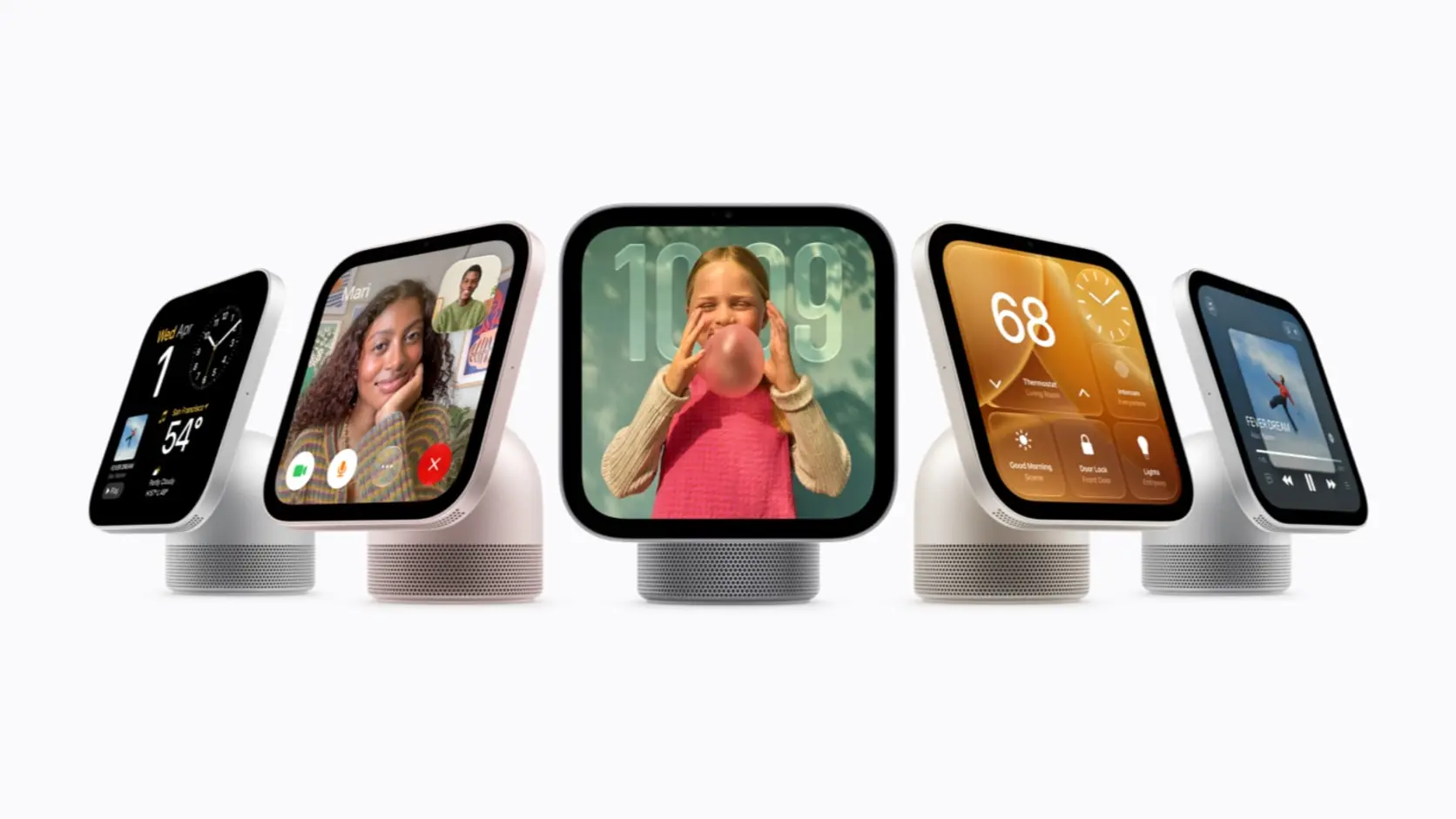
Apple has finally given the connected home a device designed to be looked at, touched, and shared.
HomeView is a 7-inch smart display built around Apple Intelligence and the new Siri AI. It plays music and video, makes FaceTime calls, shows photos, runs timers and recipes, and serves as a dashboard for lights, locks, thermostats, cameras, and automations. Preorders open today at $299, with availability beginning November 13.
Apple is selling two versions at the same price. The tabletop model places an aluminum display on a domed speaker base with a tilting stainless-steel hinge. A wall-mounted model uses the same screen and core features with mounts from Schneider Home sold separately. The tabletop design comes in silver, starlight, rose pink, and space gray; the wall model comes in silver and space gray.
A household screen that knows who is looking
HomeView can recognize as many as six people by face and switch to each person’s Home Screen, widgets, messages, calendar, reminders, FaceTime history, and Find My information. Apple says personal content appears only when the enrolled person is recognized and their paired iPhone or iPad is nearby and recently unlocked.
That distinction matters. Shared displays often force families to choose between a generic dashboard and an account that exposes too much. HomeView is Apple’s attempt to make the same screen communal at a distance and personal up close. Its interface simplifies information when someone is across the room, then reveals more detail as they approach.
Siri AI supplies the conversational layer. Anyone can use its world knowledge and music discovery, while a paired Apple Intelligence-capable iPhone or iPad lets it draw on private context from apps such as Messages and Calendar. Conversations can continue in the Siri app on another Apple device.
More display than speaker, but still both
The screen reaches 500 nits and can dim to 0.3 nits for a nightstand. Apple also built faces for photos, information, motion-responsive art, and Snoopy. Two full-range drivers in the display work with a down-firing woofer and passive radiators in the base for Spatial Audio; the wall model uses a two-driver system tuned for its placement.
FaceTime uses Center Stage to keep people framed. Messages can be dictated or typed, Intercom reaches other Apple devices around the home, and web recipes can become step-by-step cooking views with hands-free timers. HomeView can also show up to nine camera feeds at once and summarize compatible HomeKit Secure Video clips.
An A18 chip and isolated Secure Exclaves handle camera and microphone data separately from the rest of the system. Apple says requests can run on-device or through Private Cloud Compute, while personal Home app data remains end-to-end encrypted.
HomeView is not just another screen in Apple’s lineup. It is the missing control surface for the company’s newly broadened home ecosystem — one that makes Siri, media, communication, and accessories feel like parts of the same product.